Moore Backs Stopgap Bill to Keep Government Open
Rep. Barry Moore says the short-term funding bill protects farmers, veterans, defense programs and taxpayers while Congress finishes its 2027 budget work
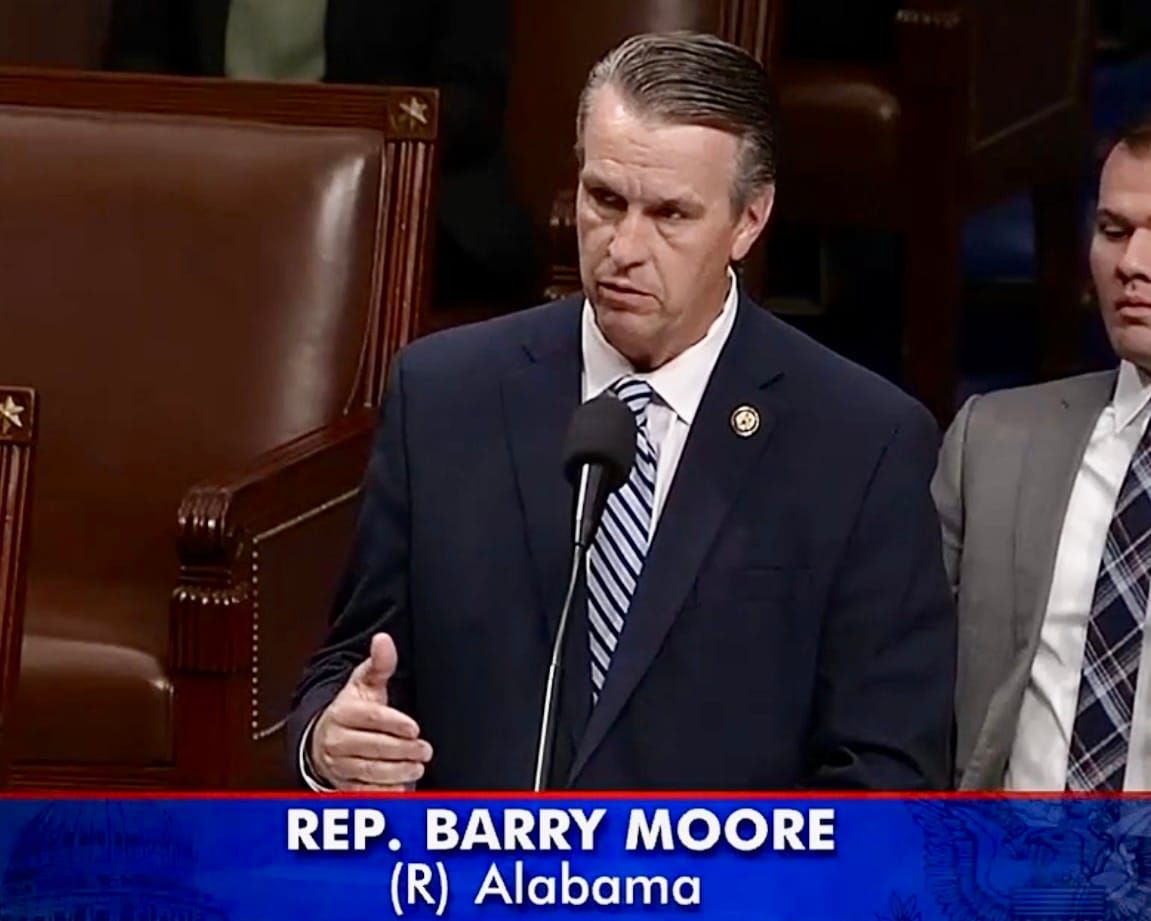
TL;DR: U.S. Rep. Barry Moore joined a united Alabama delegation in voting for a short-term spending bill that keeps the federal government funded through Dec. 11 while Congress works to finish its fiscal year 2027 spending bills. The measure maintains funding for key defense, agriculture, veterans, transportation and disaster programs while blocking a congressional pay raise. Moore said the bill keeps the government open without giving Washington a “blank check” and protects priorities important to Alabama families, farmers, veterans and service members.
U.S. Representative Barry Moore (R-AL-01) voted Tuesday for a short-term spending bill that will keep the federal government funded through Dec. 11, giving Congress more time to finish work on its fiscal year 2027 spending bills.
The House approved the Senate-amended Continuing Appropriations and Extensions Act, 2027 (H.R. 6500) by a wide bipartisan vote of 370-48 on Sept. 1. The Senate had previously passed its version 90-6 on Aug. 8. The measure was sent to President Donald Trump, who signed the bill Wednesday.
The stopgap measure, commonly known as a continuing resolution or CR, largely keeps federal spending at current fiscal year 2026 levels through Dec. 11 or until Congress approves full-year appropriations, whichever comes first.
Moore said his vote was aimed at avoiding a government shutdown while protecting programs important to Alabama, including agriculture, veterans services, transportation, disaster relief and national defense.
“Alabamians expect us to be good stewards of their hard-earned tax dollars, and that means keeping the government open without giving Washington a blank check,” Moore said in a statement. “This bill protects our service members, Alabama farmers, veterans, small businesses, and our national defense while putting common-sense limits on Washington spending. I’ll always fight to make sure Alabama’s priorities come first.”
The measure also extends a number of programs and federal authorities that otherwise faced expiration. Those include programs involving veterans health care and benefits, agriculture, cybersecurity, transportation and the National Flood Insurance Program.
For veterans, the legislation extends authorities tied to health care, suicide prevention, rural mental health services, family caregivers, housing aid and services for homeless and disabled veterans.
The measure also maintains the freeze on congressional pay, preventing members of Congress from receiving a pay increase while the temporary funding measure is in effect.
The CR removes the immediate threat of a federal funding lapse at the end of September. It also pushes the next major government funding deadline beyond the Nov. 3 midterm elections and into December.
Support for the bill was unanimous among Alabama's congressional delegation.
All seven of Alabama's U.S. House members voted for the measure Tuesday. Senators Katie Britt and Tommy Tuberville had already backed the Senate version in August, giving Alabama's nine-member House and Senate delegation a 9-0 record in favor of the stopgap funding package.
The bill does not settle the broader fight over federal spending for the coming fiscal year. Instead, it gives lawmakers roughly two additional months to finish negotiations over the regular appropriations bills that fund federal agencies and programs.
Congress normally funds the government through 12 annual appropriations bills. When lawmakers fail to complete that process before the start of a new fiscal year, a continuing resolution can temporarily extend funding and prevent a partial government shutdown.
The latest CR keeps most spending at existing levels rather than setting permanent fiscal year 2027 funding. Supporters argue that approach prevents disruptions to federal workers, military personnel, veterans programs, disaster response and other services while Congress completes the full budget process.
For Moore, the vote also fits with his argument that Congress can keep the government operating without treating a temporary funding bill as an open-ended commitment to higher federal spending.
The next deadline is now Dec. 11.
By then, lawmakers will either need to approve the remaining fiscal year 2027 spending measures, pass another continuing resolution, or risk a partial federal government shutdown.