
Palmer’s CHARM Act passes House, targets mineral reliance
Bipartisan bill would turn e-waste, coal ash and other discarded materials into new domestic sources of critical minerals
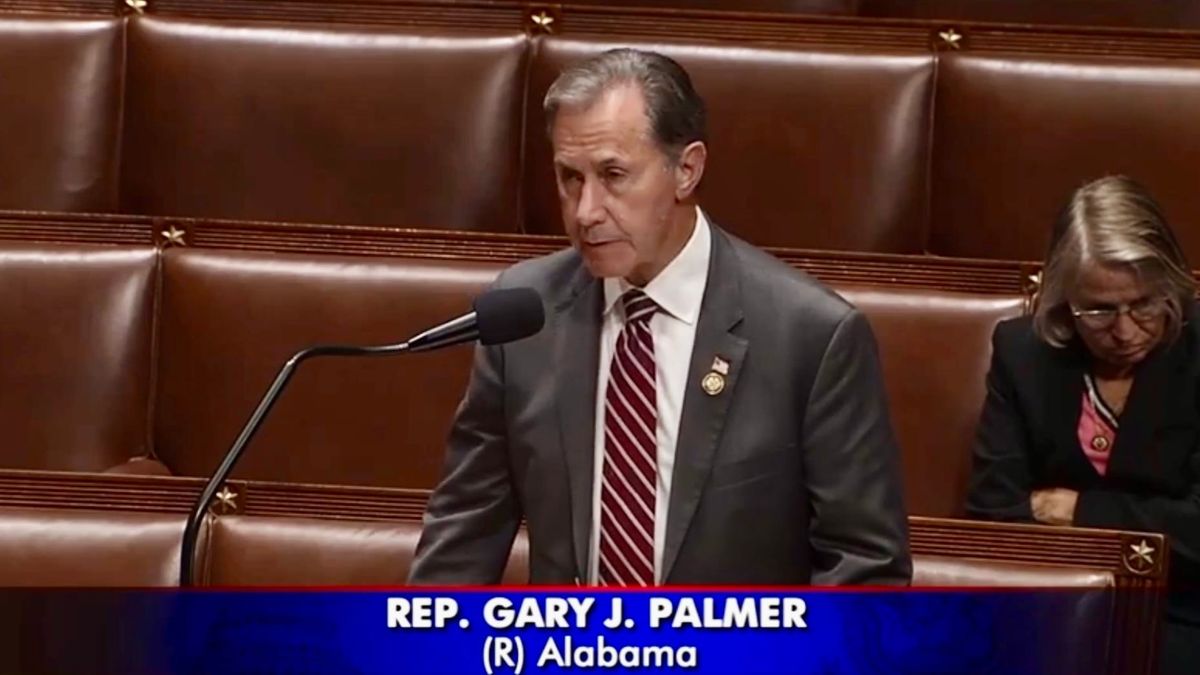
A bipartisan bill from Alabama Congressman Gary Palmer (R-AL-06) focused on recovering critical minerals from waste and other discarded materials has cleared the U.S. House.
The House passed H.R. 9617, the Coordinating and Harnessing America’s Recovery of Minerals Act, or CHARM Act, by voice vote Tuesday night under suspension of the rules. The measure now heads to the Senate.
Palmer introduced the bill with Rep. Paul Tonko (D-NY), the ranking Democrat on the House Energy and Commerce Committee’s Environment Subcommittee. The pair introduced the measure July 9, and the Energy and Commerce Committee advanced it in July.
The legislation targets a long-standing weak point in the U.S. supply chain: the nation’s reliance on foreign sources for many of the minerals needed for electronics, energy systems, defense equipment and other products.
“America should not have to rely on China or other adversarial nations for the critical minerals that power our economy and strengthen our national security,” Palmer said following passage of the bill. “The House passage of the CHARM Act is an important step toward making better use of the resources we already have here at home and strengthening our domestic supply chains. I’m grateful to Congressman Tonko for working with me on this bipartisan effort, and I look forward to seeing the Senate take up this legislation.”
The concern over foreign dependence is not merely theoretical.
According to the U.S. Geological Survey’s 2026 Mineral Commodity Summaries, the United States was 100% net-import reliant for 13 of the 60 minerals on the federal critical minerals list in 2025. Another 20 were at least 50% import reliant. China was the leading global producer of 20 of the 60 critical minerals.
Rather than focusing solely on opening new mines, the CHARM Act looks at materials that are already in the United States.
The bill would direct the Environmental Protection Agency to develop a National Critical Mineral Recovery Strategy in consultation with other federal agencies. The goal is to find and coordinate ways to recover valuable minerals from discarded materials, including electronic waste and waste associated with past mining and industrial activity.
That could include sources such as old electronics, legacy mine sites and coal ash — materials that may contain minerals that would otherwise have to be imported.
The strategy would also examine legal, technical and other barriers that now stand in the way of recovering those minerals. EPA would then be required to report to Congress every two years on work carried out under the strategy.
Tonko said the legislation could help both U.S. industry and national security.
“Building out our domestic supply chain and ensuring we have the materials our nation needs to power our energy system leads to lasting benefits for our workers, national security, and economy,” Tonko said. “Our CHARM Act does just that by establishing a coordinated federal strategy for recovering critical minerals from discarded materials. I’m grateful to Congressman Palmer for his partnership leading this legislation and am proud to see its passage through the House.”
The proposal would carry a relatively small federal price tag.
The Congressional Budget Office’s estimate for H.R. 9617 found that implementing the measure would cost about $1 million from 2026 through 2031, subject to future appropriations. CBO found no increase in direct spending or federal revenue and no private-sector or intergovernmental mandates.
The CHARM Act was one of several critical-mineral and recycling bills considered by the House this week. Lawmakers also approved measures dealing with lithium-ion battery recycling and recovery of critical materials from contaminated sites.
For Palmer, the bill offers another route to shore up U.S. mineral supplies without depending solely on new domestic mining projects.
USGS data show recycling already plays a notable role. Recycled critical minerals produced about $18 billion in domestic supply in 2025, and recycling was the nation’s only domestic source for several critical minerals, including antimony, bismuth, chromium, magnesium metal, tin, tungsten and vanadium.
The Senate must still approve the legislation before it can be sent to President Donald Trump for his signature.
The full text of the bill may be read HERE.
Rep. Palmer’s floor remarks on the bill may be seen on YouTube and below: