The Socialist/Marxist Roots of Labor Day
America’s worker holiday grew from a labor movement shaped in part by socialists, class conflict and the radical politics of the 1800s
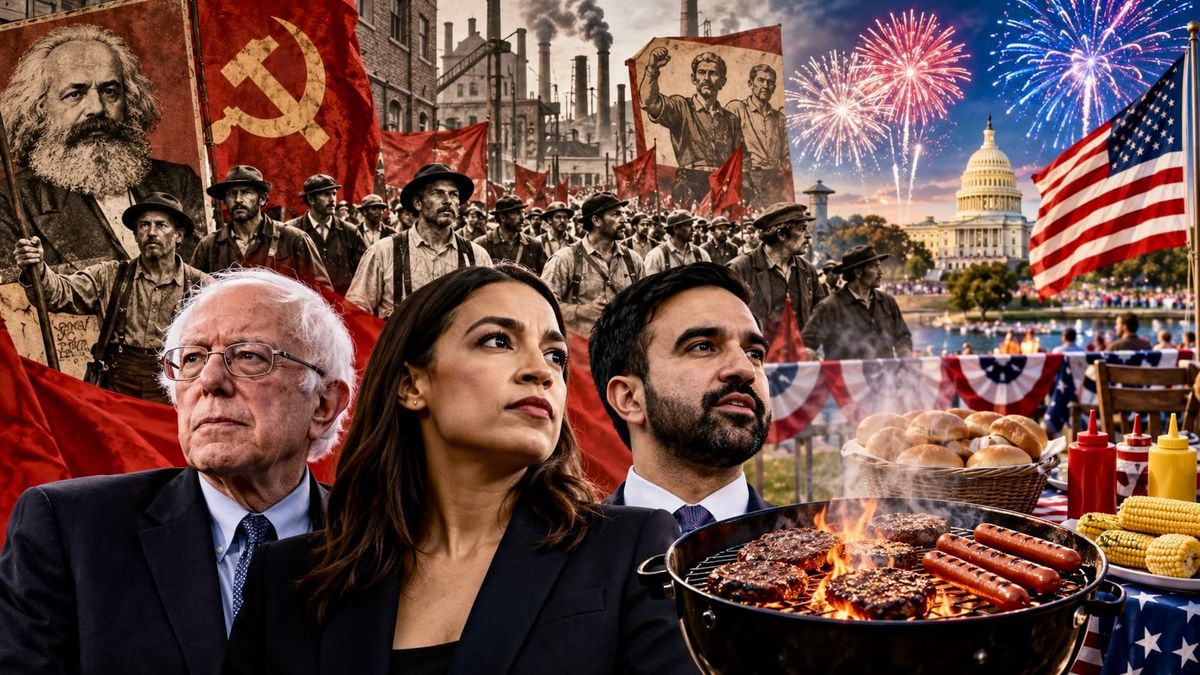
TL;DR: Labor Day may now mean cookouts, football and the end of summer, but its roots run through the radical labor politics of the late 1800s. The two men most often credited with creating the holiday, Peter J. McGuire and Matthew Maguire, both had strong ties to the socialist movement. Maguire remained a committed socialist and became the Socialist Labor Party’s vice-presidential candidate. The first Labor Day was held in New York in 1882, amid an era of strikes, class conflict and growing socialist influence. Congress made it a federal holiday in 1894, shortly after the bloody Pullman Strike. Marxist and communist groups still claim Labor Day’s radical heritage today, though the American holiday evolved into something far broader: a national tribute to workers largely stripped of its early socialist politics.
For most Americans, Labor Day means cookouts, football, sales and the unofficial end of summer.
But the holiday has a far more political history, and it’s a history of which conservatives should be aware, especially in light of current events.
Labor Day grew out of the late-19th-century labor movement, at a time when socialism, Marxism and fierce class conflict were gaining ground in the United States and Europe. Some of the men most closely tied to the creation of Labor Day were themselves active in socialist politics.
Even modern Marxist groups openly claim that history as their own.
The first Labor Day celebration took place in New York City on Sept. 5, 1882. The Central Labor Union organized a parade followed by a large gathering for workers and their families. Estimates of the parade crowd range from about 10,000 to 20,000 marchers. The U.S. Department of Labor says the event was meant to display the “strength and esprit de corps of the trade and labor organizations.”
Who actually invented Labor Day remains a matter of dispute.
For years, much of the credit went to Peter J. McGuire, a carpenter and union organizer who helped found the organization that became the American Federation of Labor. McGuire reportedly proposed a “general holiday for the laboring classes” in 1882.
McGuire's politics are perhaps best described as “well to the left.”
Before becoming one of the nation's best-known union leaders, he helped organize the Social Democratic Workingmen's Party of North America, an early socialist political organization. He later moved toward the more practical trade union movement that came to dominate organized labor.
The Communist Party USA itself highlights McGuire's socialist background. In a Labor Day feature, the party described him as an early leader of America's socialist movement and noted his role in calling for labor demonstrations beginning in 1882.
However, is another contender for the title of Labor Day's founder — and his later socialist politics are even clearer.
Matthew Maguire was secretary of New York's Central Labor Union when the first Labor Day celebration was held. The U.S. Department of Labor says newer research supports the case that Maguire, rather than McGuire, may have proposed the holiday.
After Labor Day became a national holiday, the Paterson Morning Call argued that Maguire was its true author. The Labor Department also notes that Maguire held political views viewed as radical even by some other labor leaders of the time.
Maguire's politics later became unmistakable. In 1896, the Socialist Labor Party nominated him for Vice President of the United States.
In fact, surviving proceedings from the Socialist Labor Party's 1896 convention record Maguire being unanimously selected as the party's Vice-_residential nominee.
That gives the debate over Labor Day's founder an unusual twist: the two men with the strongest claims to creating the holiday both had significant ties to the socialist movement.
Modern Marxists make little effort to hide that connection.
An article published by In Defence of Marxism — the website of the Revolutionary Communist International — states flatly that Labor Day “originated in the labor movement and was conceived of by socialists.”
The Marxist account says McGuire and Maguire belonged to the same branch of the Socialist Labor Party and portrays the first Labor Day not as a mild civic celebration, but as an act of class protest.
According to the publication, the workers marched through New York on an unpaid day off to voice grievances against their employers.
“It was not simply the ‘festival for the recreation and amusement of the workers and their families’ that the Department of Labor website claims,” the Marxist account argues. “Its origins lie clearly within the militant labor tradition of this country and of the international working class.”
Conservative writers have seized on those admissions.
David Leach, writing at The Strident Conservative, argues that Labor Day's origins are inseparable from the socialist movements then spreading through organized labor. He points in particular to the Marxist movement's own description of the September holiday as one “conceived of and celebrated by socialists and militants within the labor movement.”
Other conservative outlets have made similar arguments.
Economist Martin Armstrong has also linked Labor Day's creation to the rise of Marxist thought during the second half of the 19th century.
There is an important distinction, though. Marxism did not create the American labor movement, and not every union leader of the era was a Marxist. Workers had very real grievances over low pay, dangerous factories, child labor and grueling work weeks. Organized labor contained socialists, Marxists, anarchists, reformers and others who wanted better wages and conditions without seeking the end of capitalism.
Labor Day emerged from that much larger movement.
The Marxist connection becomes even clearer when Labor Day is placed alongside May Day.
American unions pushed for an eight-hour workday during the 1880s. The movement culminated in nationwide demonstrations beginning May 1, 1886. Socialists and other radicals were heavily involved in that fight, according to the Labor Department's own history of the period.
The campaign became tied to the Haymarket affair in Chicago, where a bomb was thrown at police during a labor rally on May 4, 1886. The violence and the executions that followed became powerful symbols for the international socialist movement.
In 1889, the Second International — an international socialist organization — adopted May 1 as a day of worker demonstrations. What became International Workers' Day, or May Day, remains closely linked to socialist and communist movements around the world.
The United States went another way.
Instead of May 1, the American labor holiday remained in September.
Labor Day spread well beyond New York during the 1880s. Oregon became the first State to recognize it by law in 1887. Other States soon followed.
By 1894, the nation was in the midst of severe economic and labor unrest.
Workers at the Pullman Palace Car Company near Chicago went on strike after wage cuts. The American Railway Union, led by Eugene V. Debs, joined the fight, crippling rail traffic. President Grover Cleveland sent federal troops into the dispute. Violence followed, and workers were killed.
Congress moved quickly afterward.
On June 28, 1894, Cleveland signed legislation making the first Monday in September a legal federal holiday. The U.S. Department of Labor says 23 States had already adopted Labor Day by that point.
The Senate historical account notes that Congress unanimously approved the federal holiday in the aftermath of the Pullman violence.
The Marxist account of Labor Day portrays Cleveland's action as an attempt to channel a growing and increasingly radical labor movement away from May Day and toward a less revolutionary American holiday.
Whether that was Cleveland's specific intent is harder to prove. Labor Day had already been celebrated for more than a decade and had become law in many States before the Pullman strike.
Still, the timing was curiously coincidental.
Congress made Labor Day a federal holiday in the middle of one of the most violent clashes between labor, business and the federal government in American history.
All that being said, the Labor Day celebrated today bears little resemblance to the political world that gave birth to it.
For most Americans, it is neither socialist nor Marxist. It is a day off work, a family weekend and a chance to recognize the men and women who build, farm, manufacture, transport, sell and service the goods that keep the nation running.
But its history is worth remembering — if for no other reason than our modern Democratic Socialists certainly will.
Labor Day came out of an age of strikes, class conflict and radical politics. Socialists played a real role in the labor movement that created it. The two men most often credited with originating the holiday had socialist ties. One later ran for Vice President on the Socialist Labor Party ticket.
And more than 140 years after the first Labor Day parade, Marxist and communist organizations still point to the holiday's radical roots with pride.
America ultimately transformed Labor Day into something quite different.
A holiday born amid bitter conflict between capital and labor became a broad national tribute to the American worker — celebrated in the world's most successful capitalist economy.