Vatican Declares SSPX Bishops in Schism
Six bishops, hundreds of priests and some followers face excommunication after SSPX defied Pope Leo with unauthorized ordinations
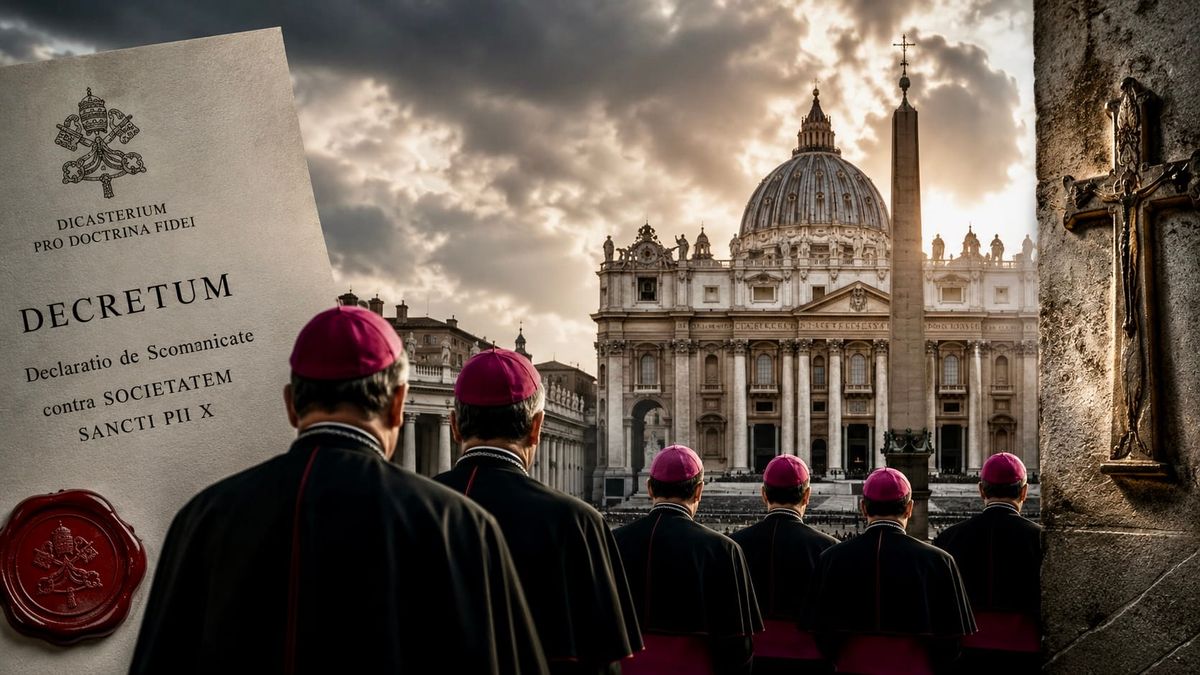
The Vatican has formally declared the Society of St. Pius X (SSPX) to be in schism after the traditionalist group consecrated four new bishops without papal approval, triggering one of the most significant breaks within the Catholic Church since 1988.
The July 2 decree excommunicated six bishops — the four newly ordained bishops along with the two bishops who performed the consecrations — and declared the SSPX itself to be in schism. The Vatican also ruled that the society's priests are excommunicated and warned that lay Catholics who formally adhere to the group likewise place themselves outside full communion with the Church.
The action followed a July 1 ceremony in Écône, Switzerland, where the SSPX proceeded with the ordinations despite repeated warnings from Pope Leo XIV and the Vatican's Dicastery for the Doctrine of the Faith that such a move would constitute "a schismatic act" under canon law.
According to the Vatican, bishops who consecrate or are consecrated without a papal mandate incur latae sententiae — or automatic — excommunication under Church law. The Holy See later issued a formal decree confirming that the penalties had taken effect.
The SSPX was founded in 1970 by Archbishop Marcel Lefebvre in opposition to reforms adopted during the Second Vatican Council. The group continues to reject several of those reforms, including expanded use of local languages in the Mass and aspects of the Church's approach to ecumenism and relations with other faiths.
This is not the first such rupture. In 1988, Lefebvre likewise consecrated bishops without papal approval, leading to automatic excommunications. Those penalties were lifted in 2009 by Pope Benedict XVI as part of an effort to restore full communion, although the SSPX itself never regained canonical status within the Catholic Church.
Despite the severity of the sanctions, the Vatican also outlined a path back into full communion for those willing to reconcile with Rome.
For lay Catholics who formally joined the SSPX schism, the Vatican said they may return by meeting with their local bishop and signing two documents: a profession of faith and a declaration accepting the official teaching of the Catholic Church.
Priests seeking reconciliation must complete similar steps, but also write directly to Pope Leo XIV requesting forgiveness and affirming their acceptance of the legitimacy of the Church's post-1960s reforms, including those of the Second Vatican Council.
The Vatican distinguished between Catholics who merely attend an SSPX Mass out of personal devotion while recognizing papal authority and those who formally adhere to the group's rejection of the Church's governing authority. According to Vatican guidance, only formal adherence to the schism incurs excommunication.
The dispute represents the first major internal crisis of Pope Leo XIV's pontificate.
Before the consecrations, the Vatican pursued months of dialogue with SSPX leaders and offered additional theological discussions in hopes of avoiding a formal split. Those efforts ultimately failed when the society announced it would proceed with the ordinations regardless of papal objections.
In comments reported after the decree, one SSPX priest expressed confidence that "a future pope will welcome us back," noting that Benedict XVI had lifted the previous excommunications in 2009.
The Vatican's latest decree, however, makes clear that Pope Leo views communion with the Bishop of Rome as essential to Catholic unity and that unauthorized episcopal consecrations strike at the heart of that principle.