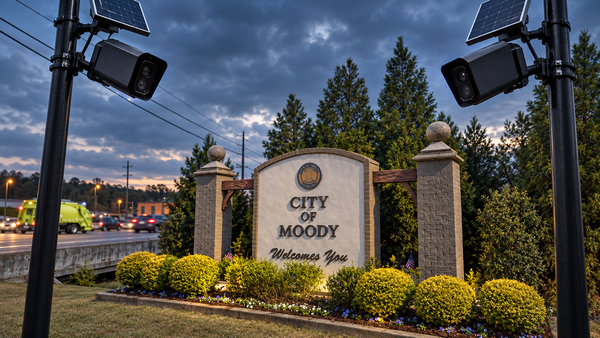
Georgia Flock Camera Abuse Cases Renew Privacy Concerns
Recent arrests of Georgia officers accused of misusing Flock data add to growing concerns over surveillance, privacy and accountability
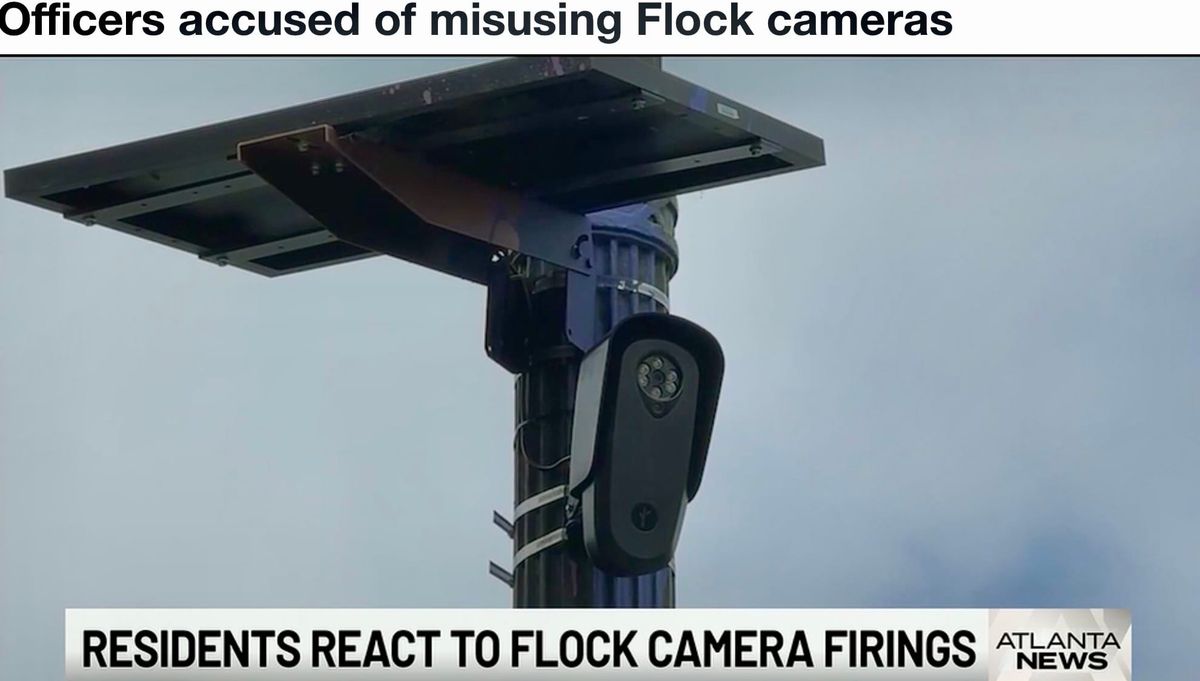
The recent arrest and firing of multiple Georgia law enforcement officers accused of abusing Flock Safety's automated license plate reader (ALPR) system is fueling renewed scrutiny of the rapidly expanding surveillance technology, including its use in Alabama.
Within just two weeks, at least 10 Georgia officers have been arrested on criminal charges tied to the alleged misuse of Flock camera data. The cases include five former Albany police officers, three Fayetteville police officers and a former DeKalb County Sheriff's deputy. Investigations remain ongoing, and additional audits could uncover more improper searches.
The arrests stem from Flock Safety's recently deployed audit assistance feature, which flags search patterns that appear inconsistent with legitimate law enforcement investigations. According to investigators, some officers allegedly searched license plates belonging to themselves, relatives, friends or other individuals for personal reasons rather than criminal investigations.
The Georgia Bureau of Investigation charged the Albany officers with multiple counts of Misuse of License Plate Data and Violation of Oath of Office after an internal audit uncovered unauthorized searches. One officer faces 11 counts of misusing license plate data.
Fayetteville officials announced July 17 that three officers were terminated after an audit revealed searches conducted outside the scope of their duties.
"The department will not speculate regarding the intent behind those searches," the department said in a statement.
A separate investigation led to the arrest of a DeKalb County Sheriff's deputy accused of improperly accessing the system.
The growing list of criminal cases has intensified concerns raised by privacy advocates, who argue that systems capable of tracking millions of innocent motorists are vulnerable to abuse by those entrusted with access.
Earlier this month, the Institute for Justice documented at least 24 known cases in recent years, most occurring since 2024, in which officers allegedly used automated license plate reader databases to stalk current or former romantic partners or for other personal purposes. The public interest law firm argues those incidents likely represent only a fraction of actual abuses because many agencies perform limited auditing of database searches.
The nonprofit State of Surveillance has also warned that Flock's nationwide network has now recorded more than 20 billion vehicle scans while expanding data sharing among thousands of law enforcement agencies. The organization has expressed concern that Immigration and Customs Enforcement (ICE) and other federal agencies can gain indirect access to information through partner agencies, despite previous public assurances limiting direct access.
The latest arrests come just days after the U.S. Supreme Court's decision in Chatrie v. United States, a ruling that legal analysts say could reshape how courts evaluate modern digital surveillance. Although Chatrie addressed geofence warrants rather than license plate readers, privacy advocates contend the Court's reasoning could eventually influence future legal challenges involving persistent location tracking through ALPR networks.
An earlier analysis by ALPolitics.com examined how the decision may place growing constitutional pressure on expansive surveillance systems that continuously document the movements of ordinary Americans without individualized suspicion.
Flock Safety maintains that its technology is designed to assist law enforcement in locating stolen vehicles, missing persons and criminal suspects. The company has emphasized that audit logs and new monitoring tools are intended to identify and deter misuse by agency personnel. Following the Albany investigation, Flock stated that its audit records helped investigators document the unauthorized searches.
Some civil liberties advocates argue the Georgia cases demonstrate that technical safeguards alone cannot eliminate the risk of abuse once large-scale surveillance systems are deployed. They contend that stronger auditing requirements, public transparency and judicial oversight will become increasingly important as ALPR networks continue expanding across the country.
Others, such as the West Virginia Freedom Caucus, have called for the total removal of all Flock cameras and similar devices. “The Fourth Amendment was written specifically to stop the government from engaging in generalized surveillance and warrantless searches,” said Freedom Caucus Secretary Henry Dillon. “And the Supreme Court ruled in United States v. Jones, and just this year in Chatrie v. United States, that police must get a warrant, even when private companies, such as Flock, massively track innocent people.”
“Flock cameras don’t just identify criminals—they create a database documenting where law-abiding citizens worship, seek medical care, conduct business, and travel. That is fundamentally incompatible with a free society,” Delegate Dillon emphasized.
“The purpose of government is to protect the God-given rights of the people, not to track and record their daily activities. This unconstitutional governmental activity must end – now”
For Alabamians wanting to join the growing national movement to resist Flock surveillance, a number of Facebook groups such as No Flock Alabama, DeFlock Bhm and others are available.