Heart of Dixie “Our Man In Mar-a-Lago” Takes Aim at Broad Range of Topics
The podcast tackles GOP strategy, data centers, an HSI arrest, the Mabel Amos Trust and questionable State contracts

The latest episode of the Heart of Dixie podcast covered a lot of Alabama ground, from Republican campaign strategy and the State's growing data center fight to ethics disputes, government spending and a disturbing criminal case involving a federal agent.
In an episode titled “Our Man In Mar-a-Lago,” hosts Harry Still III and Brandon Moseley were joined by former Republican State Rep. Perry Hooper Jr. for a wide-ranging discussion of State and local politics.
The show opened with a look at Republican campaign strategy heading toward November.
The hosts reviewed an Alabama Republican Party campaign ad built around a football-style “game plan,” featuring GOP candidates and Republican gubernatorial nominee U.S. Sen. Tommy Tuberville.
Much of the discussion centered on how Republicans sell their message to Alabama's blue-collar voters. The hosts also discussed changes within the State party and its new Executive Director, Reed Harris.
The conversation soon moved to one of Alabama's hottest political issues: hyperscale data centers.
Still, Moseley and Hooper discussed growing public opposition to proposed projects and the political problems the issue could create for State leaders.
Tuberville, who had been an outspoken supporter of attracting data centers to Alabama, has recently taken a tougher line. He now says local communities should have more say and data center operators should pay full taxes and cover the infrastructure costs they create.
“Here’s my message to data centers: If you want to use our resources, you pay full taxes, cover the total cost of your energy, and replace what you take,” Tuberville said. “We’ll welcome you with open arms, but keep your hands out of our pockets.”
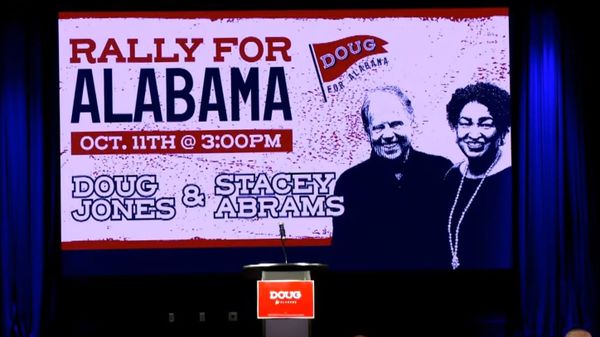
Democratic gubernatorial nominee Doug Jones has called for a moratorium and argued that Alabama's approval process has lacked transparency.
“What I see happening in Lowndes County right now is really typical of what’s wrong with Alabama government,” Jones said in August. “Everything done behind closed doors, no transparency.”
The tone changed sharply when the hosts turned to the arrest of Homeland Security Investigations Special Agent Kent Blacklidge.
Blacklidge, 43, turned himself in to the Baldwin County Jail following a grand jury indictment. He faces nine charges, including rape, sodomy, sexual abuse and incest. Spanish Fort police said he had been placed on administrative leave when the investigation began.
Alabama Attorney General Steve Marshall said Blacklidge's federal duties included child exploitation cases.
“What I understand is that with HSI he was directly involved in child exploitation cases,” Marshall said.
The charges are allegations, and Blacklidge is presumed innocent unless proven guilty.
The podcast then returned to a controversy the hosts have followed for years: the Mabel Amos Memorial Trust.
Publisher Francis “Paul” Ripp has repeatedly raised questions about the scholarship trust and Alabama Ethics Commission Executive Director Tom Albritton.
A 2022 lawsuit filed by relatives of former Secretary of State Mabel Amos accused Regions Bank and its former chief trust officer of misconduct involving the trust. The suit also drew attention to scholarships awarded to Albritton's children while he served as a trustee. Montgomery attorney Tommy Gallion represented Amos family members in the litigation.
Albritton has disputed allegations of wrongdoing. Reporting on the controversy notes that he has maintained the awards complied with the trust's rules and that he did not participate in decisions involving his children.
The hosts voiced strong support for Gallion, portraying the longtime Alabama attorney as unfairly targeted by the State's legal establishment. Those assertions reflect the hosts' views and remain disputed.
The program also returned to Baldwin County, where the hosts discussed a bar complaint involving Lagniappe editor Rob Holbert and attorney C.C. Marino. They also touched on government transparency and personnel issues in Gulf Shores and Orange Beach.
The final major subject was Alabama's Contract Review Committee.
The hosts questioned several State expenditures, including roughly $2 million connected to electric vehicle education and architectural and professional service contracts with potentially open-ended costs.
Alabama's EV infrastructure plan recommended $2 million annually for Drive Electric Alabama and related consumer education, awareness and dealer training.
ADECA has described Drive Electric Alabama as a public education effort using billboards, social media, television, radio and events to promote electric vehicles.
For Still, Moseley and Hooper, the larger question was whether lawmakers are giving large State contracts enough scrutiny before taxpayer money goes out the door.
That concern tied together much of the episode. Whether discussing data centers, scholarship funds, local records or State contracts, the hosts repeatedly returned to one theme: how Alabama's government uses public money and power — and how closely the public gets to watch.
The full episode, “Our Man In Mar-a-Lago,” may be seen on YouTube and below: