NFL Asks Supreme Court to Rein In Sports Prediction Sites
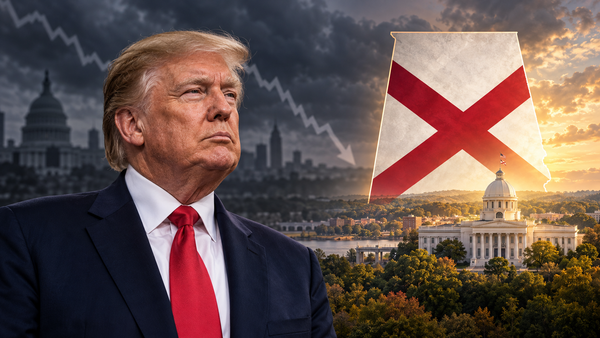
Alabama joins a multistate push to preserve State gambling laws as the NFL challenges federal oversight of sports prediction markets
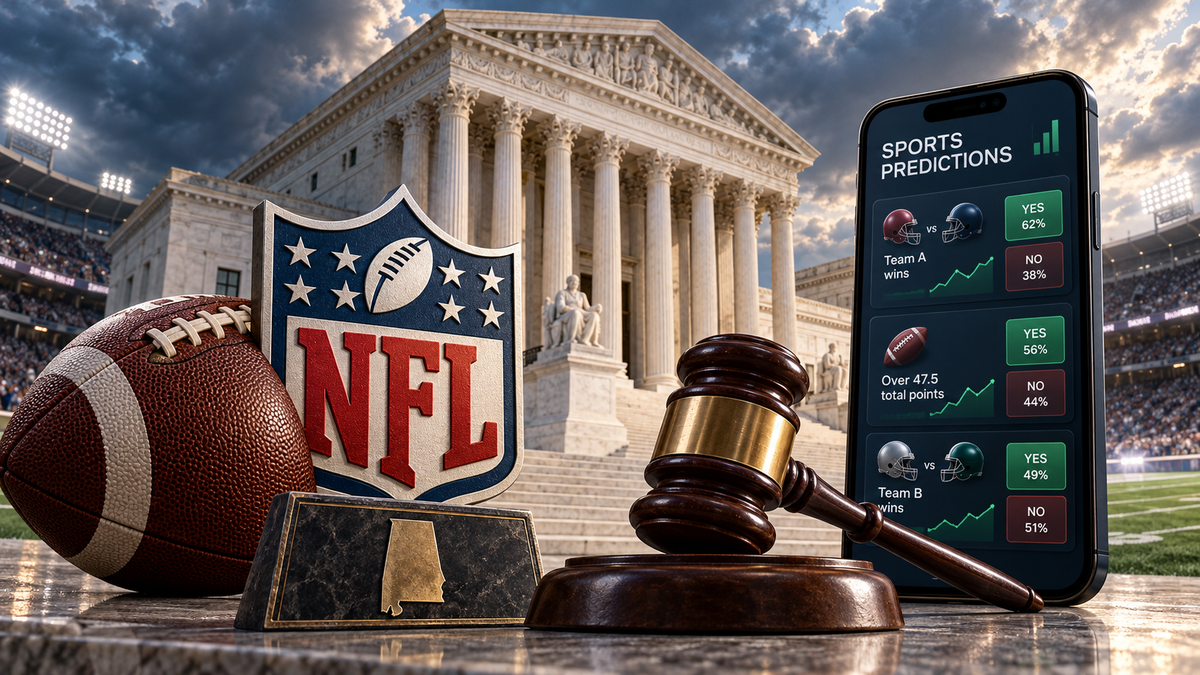
TL;DR: The NFL wants the Supreme Court to hear a case over whether sports prediction contracts fall under State gambling laws. Alabama has joined the push, with FanDuel Predicts operating here despite the State’s ban on online sports betting.
The NFL is asking the U.S. Supreme Court to settle whether sports prediction markets can offer what the league views as gambling without following State gambling laws. For Alabama, where online sports betting remains banned, the dispute could determine whether federal financial rules let companies enter a market lawmakers have refused to open.
The league filed a friend-of-the-court brief Oct. 8 supporting New Jersey’s request for review of its fight with Kalshi. Alabama Attorney General Steve Marshall also joined an Ohio-led brief filed Oct. 7 on behalf of 39 States and the District of Columbia, urging the Court to preserve State authority over sports wagering.
“Prediction markets are overwhelmingly used for consumer sports gambling,” the NFL wrote in its Supreme Court brief. The league argues that these contracts create risks for gamblers rather than help businesses manage risks they already face.
Prediction platforms let customers buy and sell contracts tied to whether an event will happen. Sports contracts can cover game winners, scores and player performance. Operators argue that these products are financial contracts governed by the Commodity Futures Trading Commission (CFTC), rather than wagers subject to State law.
That distinction has divided federal courts. The Third Circuit sided with Kalshi in the New Jersey case. The Sixth and Ninth Circuits reached opposing conclusions in other disputes, backing States seeking to enforce their gambling laws. The NFL wants the justices to resolve that split.
The league’s concerns include bets that one player, coach or official could influence, along with trading based on inside information. It also wants a minimum age of 21. Its brief says the CFTC has declined to adopt that limit, allowing 18-year-olds to trade instead. According to the NFL, contracts tied to its games accounted for $1.8 billion of the $3.3 billion traded on prediction markets on the first Sunday of this season.
The companies dispute the league’s criticism. The Associated Press reported that Kalshi says the CFTC actively polices sports markets and that pending federal rules address the NFL’s concerns. The CFTC, meanwhile, told Reuters that the NFL declined an agreement intended to improve cooperation and information sharing.
In Alabama, the legal distinction already has real effects, and has raised significant questions.
FanDuel and CME Group launched FanDuel Predicts in Alabama and four other States on Dec. 22, 2025. Their announcement said sports contracts would be offered in States where online sports betting is not legal, except on tribal lands. FanDuel also said it would stop offering those sports contracts when a State legalizes online sports betting.
As ALPolitics.com previously reported, Alabama has no licensed online sportsbook market. Yet residents can buy sports-event contracts through prediction platforms that claim federal law shields them from State gambling restrictions. The FanDuel launch renewed debate over State authority, lost tax revenue and gambling expansion.
Alabama also has its own Kalshi lawsuit. Nick Willis sued in Franklin County Circuit Court in March, alleging that sports contracts offered through the platform are unlawful wagers. He seeks to recover alleged gambling losses under an Alabama statute.
Kalshi moved the case to federal court, but U.S. District Judge Harold Mooty III sent it back to State court Sept. 8. That ruling addressed which court could hear the case. It did not decide whether Kalshi’s contracts are illegal gambling or whether federal law ultimately overrides Alabama law.
The court battle comes amid a broader fight over gambling’s political influence in Alabama. In May, a coalition of conservative and faith-based groups asked Marshall and Secretary of State Wes Allen to review alleged campaign finance violations tied to gambling interests. In June, the Christian Coalition of Alabama called for more disclosure of gambling-linked contributions moving through SV&B PAC. Those demands concern campaign finance and remain separate from the legal fight over prediction contracts.
The Supreme Court has not yet agreed to hear New Jersey’s appeal. Kalshi’s response is due Nov. 9, according to the Court’s docket.
For Alabama, the central question is whether its decision to prohibit online sports betting also reaches sports prediction contracts—or whether federal commodities law places those transactions beyond the State’s control.
The Ohio-led brief which was joined by Alabama and 38 other States and the District of Columbia may be found HERE.