Samaritan’s Purse Rejects $300M Trump Grant
Franklin Graham says the ministry will rely on donors while remaining open to federal partnerships during future emergencies
Samaritan’s Purse has turned down a $300 million grant from the Trump administration, saying the Christian relief group will rely on God and its private donors instead.
The two-year award would have placed the Boone, North Carolina-based ministry at the center of a new federal plan for disaster aid overseas. After prayer and internal talks, however, Samaritan’s Purse withdrew from the deal.
The decision does not mean the group is cutting ties with Washington. President and CEO Franklin Graham said Samaritan’s Purse remains willing to work with the federal government during major crises. It will simply not take part in this large “macro grant” program.
The proposed award was part of nearly $2 billion in new health and relief funding announced by the State Department on Aug. 6. The money marks a sharp shift in how the Trump administration plans to deliver foreign aid. It follows deep cuts and sweeping changes to programs once run through the U.S. Agency for International Development.
Rather than build much of that work around a large federal aid agency, the administration is turning to Christian ministries, local churches,, faith-based hospitals and other private groups with networks already in place.
Of the full amount, $538 million was set aside for groups responding to natural disasters and long-term crises, according to the State Department’s announcement.
Samaritan’s Purse was in line to oversee $300 million of that money over two years. Its work would have included “immediate life-saving assistance to people affected by natural disasters” and support for relief efforts in long-running emergencies, a State Department spokesperson told Christianity Today.
World Vision and Compassion International are set to oversee the other $238 million for one year of disaster relief.
Graham provided the following statement to ALPolitics.com on the decision:
“Samaritan’s Purse was invited by the U.S. Department of State to participate in a recently announced macro grant funding agreement of $300 million over two years. We were honored to be a part of this proposal. While we deeply appreciate the confidence that the State Department has placed in Samaritan’s Purse, after prayer and discussion, we have withdrawn from being a recipient of these funds.
“Throughout my history leading Samaritan’s Purse, we have always relied on God, not government, for funding. We thank God for the incredible donors He has led to be a part of upholding this ministry. As we have done for decades, we will continue sharing the hope of the Gospel of Jesus Christ—His death, burial, resurrection, and coming return—always responding to crises in Jesus’ Name.
“We are grateful for our working relationship with the State Department and will continue to be available to partner with the U.S. government in response to emergencies, just not through this macro grant program. I am thankful for the changes President Trump has made to America’s foreign aid program and appreciate the tremendous efforts Secretary of State Marco Rubio has put into this. I’m grateful that the U.S. government remains the global leader in providing life-saving aid around the world.”
The decision came only weeks after Samaritan’s Purse was named as a major part of the administration’s new approach. An earlier ALPolitics report said about $1.4 billion of the wider plan would support some 2,500 faith-based hospitals and clinics. Those funds would also help train and pay local health workers in more than a dozen countries.
Another $570 million was slated for hospitals and clinics through deals with foreign governments. World Vision and local faith-based partners could receive up to $850 million over five years, subject to the availability of funds.
Other groups named in the plan include Catholic Relief Services, the Adventist Development and Relief Agency International, HOPE Worldwide, International Care Ministries and LifeNet International.
Samaritan’s Purse has accepted federal funds before. The ministry has received about $220 million in federal contracts since 2020, much of it through USAID. Recent awards have supported work tied to disease outbreaks, earthquakes and crises in Lebanon and Cuba.
Those contracts are separate from the rejected $300 million grant. Graham’s statement also left the door open to working with the government on a case-by-case basis.
The ministry is large enough to operate without the new award. Its 2024 tax filing showed revenue of about $1.84 billion, expenses of $1.09 billion and net assets of almost $2.47 billion. Contributions accounted for 96% of its reported revenue that year.
Founded by evangelist Bob Pierce in 1970, Samaritan’s Purse provides aid to victims of war, famine, disease, poverty and natural disasters. The organization says it works in more than 100 countries and views its relief missions as part of its effort to share the Christian Gospel.
Its work includes emergency field hospitals, food and clean-water programs, medical missions, disaster rebuilding and Operation Christmas Child. According to the ministry’s official fact sheet, it had a budget of $1.37 billion in 2025.
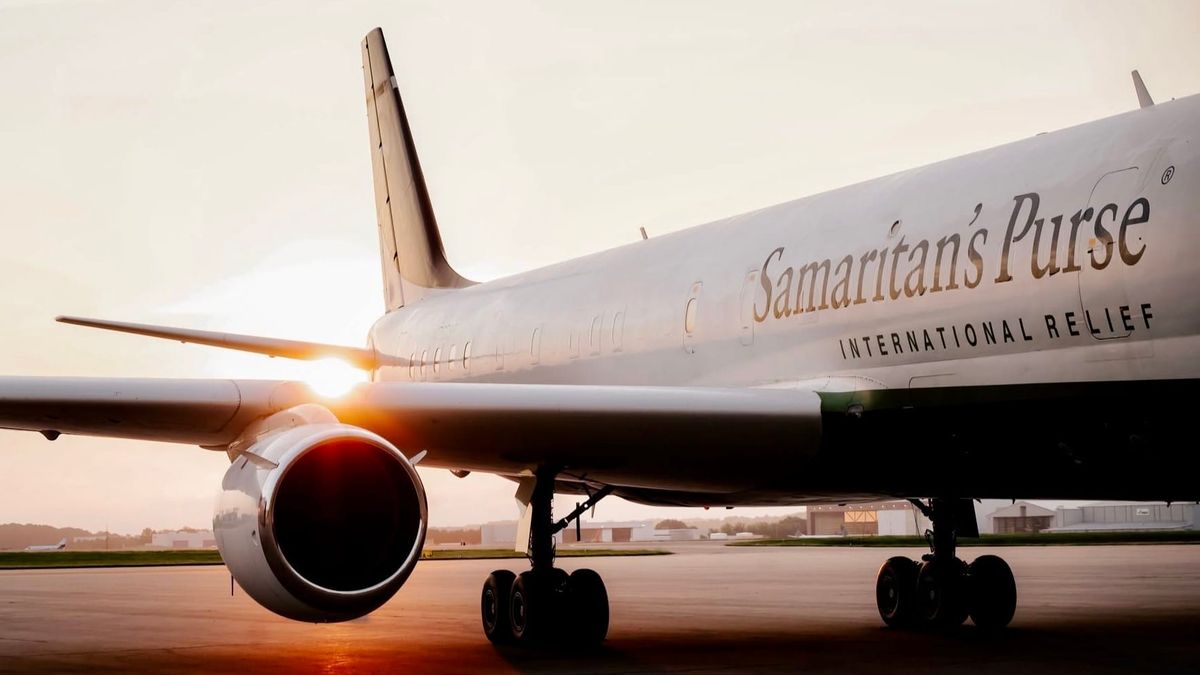
The charity also maintains a fleet of relief aircraft. Its newest Boeing 767 freighter has carried food, blankets, solar lights and other supplies to the Middle East and the Caribbean.
Graham praised Trump and Secretary of State Marco Rubio despite rejecting the grant. His statement framed the choice as a matter of how the ministry is funded — not as a protest against the administration or its foreign-aid reforms.
For Samaritan’s Purse, the bottom line was direct: It will keep working with Washington when disaster strikes, but it will not build its mission around this $300 million federal award.