Trump Takes New Aim at Birthright Citizenship
President signs two narrower orders targeting birth tourism and other citizenship claims after Supreme Court struck down his first attempt
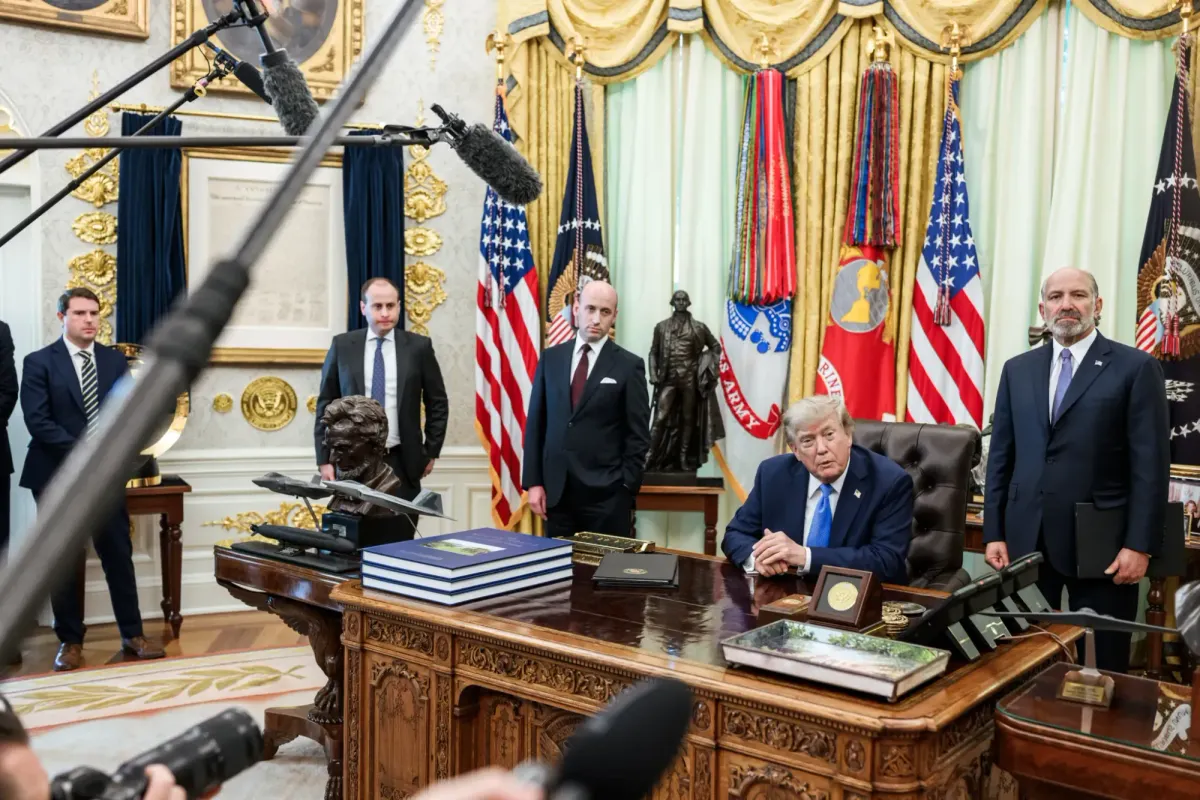
President Donald Trump is making another attempt to rein in birthright citizenship, signing two new Executive Orders Thursday aimed at limiting who can claim U.S. citizenship by birth and cracking down on foreign nationals who travel to the United States to have children.
The Aug. 6 orders mark Trump's first major move on the issue since the U.S. Supreme Court struck down his original birthright citizenship order in June.

This time, the White House has taken a narrower approach.
One order, titled “Ending Birth Tourism,” directs the State Department and Department of Homeland Security to take action against foreign nationals who enter the United States on temporary visas for the purpose of giving birth.
The second, “Continuing to Protect the Meaning and Value of American Citizenship,” seeks to deny federal recognition of citizenship in several specific cases that the administration argues fall outside the Supreme Court's June ruling.
Trump acknowledged Thursday that the new approach was shaped by his loss at the Supreme Court.
“I thought we were going to win it at the Supreme Court. Unfortunately, we had a bad decision, very unfair decision. Our country suffers because of it and we’re ending it a different way,” Trump said during the signing.
Trump later described the new orders as “adjustments” to the Court's ruling.
“We had a very unfortunate decision in the Supreme Court concerning birthright. It was close, but a very, very unfortunate decision. So we're making adjustments because it's very unfair,” Trump said.
The first order takes direct aim at what the administration calls “birth tourism” — the practice of entering the United States on a temporary visa with the intent to give birth and obtain U.S. citizenship for the child.
“Citizenship is not a commodity to be acquired through calculated exploitation and evasion of the immigration laws, such as by entering the United States on a nonimmigrant visa for the purpose of giving birth within the Nation’s borders,” the Order states.
The White House argues that companies operating birth-tourism businesses advertise U.S. citizenship, public benefits and short-term housing to pregnant foreign nationals. According to the order, some operators coach clients to mislead consular and border officials about the real purpose of their trips.
The order defines birth tourism as entering the United States on a nonimmigrant visa for the purpose of giving birth on American soil. It also covers people who help foreign nationals enter the country for that purpose.
Trump directed the Secretaries of State and Homeland Security to take steps that could include denying or revoking visas, blocking entry, removing foreign nationals and permanently barring some participants from returning to the United States.
The order also authorizes action against people and groups that help arrange birth-tourism trips.
The scale of the practice remains disputed. There is no official federal count of births tied to birth tourism. The Migration Policy Institute has estimated that about 26,000 births out of roughly 3.5 million U.S. births each year may fit the category.
Trump has argued that the number is far higher.
The second order attempts to work within exceptions that the administration says remain open after the Supreme Court's ruling in Trump v. Barbara.
The order directs federal agencies not to recognize citizenship when neither parent is a U.S. citizen and certain other conditions apply.
Those categories include children whose parents are enemy aliens or members of designated foreign terrorist groups. It also covers certain foreign government employees, embassy and consular workers, and employees of international organizations who have immunity.
The order also targets cases in which parents allegedly engaged in fraud or a commercial transaction designed to obtain citizenship for a child. That provision specifically includes paying to arrange for a mother to be in the United States to give birth, as well as some commercial surrogacy arrangements.
Federal agencies have 30 days to issue guidance on how the new policy will be carried out.
The two orders are Trump's latest attempt to narrow a system of birthright citizenship that has been broadly applied in the United States for more than a century.
Trump began that effort immediately after returning to office.
On Jan. 20, 2025, he signed Executive Order 14160, “Protecting the Meaning and Value of American Citizenship.”
The order challenged the long-standing view of the Citizenship Clause of the 14th Amendment.
The amendment says, “All persons born or naturalized in the United States, and subject to the jurisdiction thereof, are citizens of the United States and of the State wherein they reside.”
Trump's 2025 order focused on the phrase “subject to the jurisdiction thereof.”
It directed federal agencies not to recognize citizenship for a child born in the United States when the mother was illegally present and the father was neither a U.S. citizen nor a lawful permanent resident. It imposed the same rule when the mother was lawfully but temporarily in the country and the father lacked citizenship or permanent resident status.
“The Fourteenth Amendment has never been interpreted to extend citizenship universally to everyone born within the United States,” Trump's original order stated.
Federal courts quickly blocked the policy.
Alabama Attorney General Steve Marshall became one of Trump's strongest state-level allies in the legal fight. Alabama joined other Republican-led States in briefs defending the order and arguing that the modern interpretation of birthright citizenship goes beyond the original meaning of the 14th Amendment.
“The framers of our Constitution never meant for American citizenship to be handed out automatically to anyone who happens to be born here,” Marshall said earlier this year.
The States argued that children born to illegal immigrants and temporary visa holders were not fully “subject to the jurisdiction” of the United States as that phrase was understood when the 14th Amendment was ratified.
The Supreme Court disagreed.
In its June 30 decision in Trump v. Barbara, the Court ruled 6-3 against Trump's original order.
Chief Justice John Roberts wrote the majority opinion, joined by Justices Sonia Sotomayor, Elena Kagan, Amy Coney Barrett and Ketanji Brown Jackson. Justice Brett Kavanaugh agreed that Trump's order could not stand, although he based his decision on federal law rather than joining the majority's broader reading of the Constitution.
Justices Clarence Thomas, Samuel Alito and Neil Gorsuch dissented.
“Children born in the United States to parents unlawfully or temporarily present are ‘subject to the jurisdiction’ of the United States and are citizens at birth under the Fourteenth Amendment’s Citizenship Clause,” the Court held.
Roberts wrote that the children covered by Trump's order satisfied both parts of the Citizenship Clause.
“Under the Constitution, they are citizens at birth,” Roberts wrote.
The decision dealt a major blow to Trump's attempt to overturn the modern understanding of birthright citizenship through executive action.
The majority relied in part on United States v. Wong Kim Ark, the landmark 1898 decision involving a man born in San Francisco to Chinese parents. The Court held in that case that Wong was an American citizen despite his parents being Chinese nationals who were ineligible for U.S. citizenship under the laws of that era.
Trump's conservative allies sharply criticized the June ruling.
Thomas argued in dissent that the Citizenship Clause “does not extend citizenship to everyone born in the United States regardless of their parents' allegiance.”
Alito also rejected the majority's historical analysis, writing that its reasoning “rests on English feudal concepts of perpetual allegiance.”
Trump initially vowed to seek a rehearing, calling the ruling a “miscarriage of justice.”
Supreme Court rehearings are rare, however, and no petition appeared on the Court's docket by the normal deadline.
Thursday's orders instead appear designed to reopen the citizenship fight on narrower legal ground.
The new citizenship order expressly cites Trump v. Barbara and attempts to identify groups the White House contends remain outside the Court's definition of protected birthright citizenship.
The birth-tourism order takes another route. Rather than broadly denying citizenship based on a parent's immigration status, it uses the executive branch's authority over visas and entry into the country to stop foreign nationals from coming to the United States for the purpose of giving birth.
The approach may still face an immediate court fight.
The American Civil Liberties Union has already predicted that any effort to use the new orders to strip constitutionally protected citizenship will fail.
“The Supreme Court already decided this issue: Birthright citizenship is guaranteed by the Constitution. No additional executive order can change the meaning of the Constitution. Any executive order that tries to rewrite birthright citizenship will meet the same fate as the last one,” Cody Wofsy, Deputy Director of the ACLU's Immigrants' Rights Project, said Thursday.
Trump, however, said he believes the new approach will survive.
Asked Thursday whether the new actions would withstand another constitutional challenge, Trump replied, “I think it will.”