Marshall Comment Ignites Backlash
Podcast remark on Black districts draws criticism, with some warning lasting damage to Marshall’s Senate bid
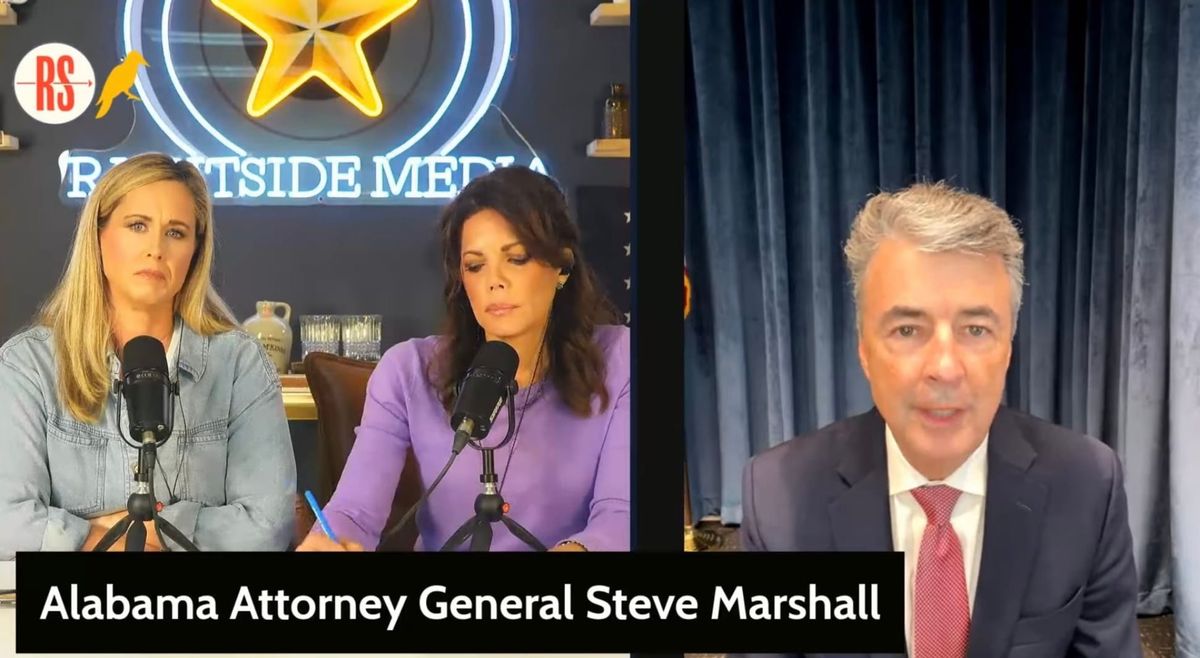
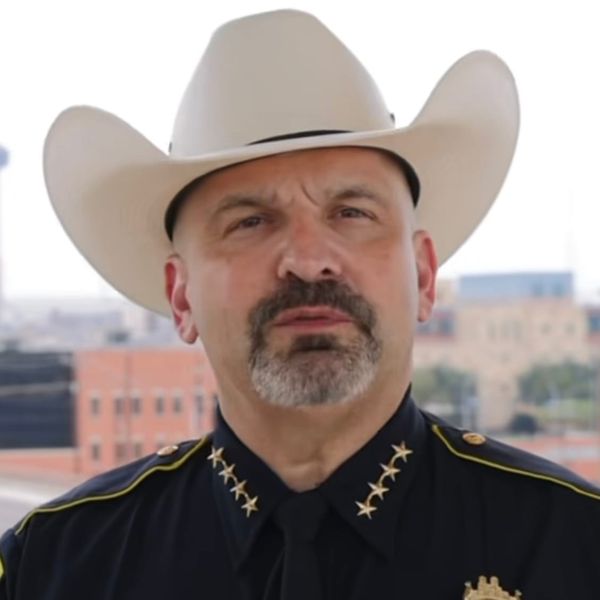
Alabama Attorney General Steve Marshall is facing mounting backlash after a podcast remark about Black congressional districts sparked criticism that has now intensified scrutiny in the State’s U.S. Senate race.
On the Rightside Media podcast interview on Tuesday, Marshall said “candidly, I think right now that the Districts that's represented by Democratic Congress members would probably (be) better off right now with some conservative voices being able to help their communities.”
The comment quickly circulated online and drew sharp responses from political observers and civil rights advocates.
U.S. Representative Terri Sewell (D-AL-07), Alabama’s senior elected Democrat took to social media to say:
“Bless his heart. Black voters don't need Steve Marshall to tell us what's best for us. We can think and vote for ourselves, and we are prepared to send a message to lawmakers in Montgomery who seek to diminish our voting power: We are NOT going back!!!”
Rep. Shomari Figures (D-AL-02) had not responded to Marshall’s comment as of this writing.
Democratic candidate for Governor Dr. Will Boyd told ALPolitics.com that:
“Voters are not political pawns on a chess board to be moved around until the outcome looks acceptable. They are citizens with an equal right to influence elections where they live.”
Marshall’s remark lands in the middle of a broader State and national fight over redistricting and minority representation following a recent Supreme Court decision that weakened key parts of the Voting Rights Act. Critics say that ruling, Lousiana v Callais, could allow States to redraw maps in ways that reduce Black political power, particularly across the South. Supporters of Callais content the decision merely restores fairness to a process which had become unbalanced by the inappropriate use of the Voting Rights Act.
The Alabama Legislature is even now in special session, considering just how to respond to Callais — and the responses being considered are contingent upon motions filed with the U.S. Supreme Court and the U.S. Court of Appeals for the Eleventh Circuit by Marshall and Secretary of State Wes Allen.

Against that backdrop, Marshall’s statement has been interpreted by some as reinforcing concerns that electoral gains made by Blacks under recent court decisions like Milligan could be rolled back. National commentary has framed the moment as part of a larger push by Republican officials to reshape districts that have historically enabled Black voters to elect candidates of their choice.
Civil rights leaders and Democratic officials have used stark language in reacting to the broader redistricting climate. The Congressional Black Caucus warned that recent changes could amount to a “nationwide scheme to rig congressional maps” by “eliminating majority-Black districts.”
Others have been equally blunt. One national analysis described the current redistricting push as an effort to “erase Black representation” in parts of the country.
Within Alabama, the reaction has been especially pointed. Community leaders and political sources say the comment struck a nerve in a State where Black voter representation has been at the center of years of litigation and federal court intervention.
Several Republican operatives, speaking privately, have expressed concerns that the fallout could have real political consequences. With a crowded and fluid GOP Senate primary field, even small shifts in voter perception can carry weight. Some question whether the remark has caused lasting damage to Marshall’s Senate bid, particularly as candidates compete for undecided voters in the critical days leading up to the May 19 primary.
As a Statewide race, the Senate race in which Marshall is competing should not be affected by the Callais ruling or subsequent redistricting, but Marshall’s current position of Attorney General places him squarely in the center of the process currently playing out in the courts and the Legislature.
The controversy also underscores a deeper divide in how political leaders view representation. Supporters of race-neutral districting argue maps should not be drawn with race as a primary factor. Critics counter that without such protections, minority voters risk losing meaningful influence at the ballot box.
For Marshall, the timing may prove as significant as the comment itself. With the primary approaching and attention now extending beyond Alabama, the episode has introduced a new layer of uncertainty into an already competitive race — one that may not fade quickly.
The full podcast with hosts Allison Sinclair and Annie Beth Shaver and AG Marshall may be seen on YouTube and below. The comment by Marshall referenced above is at ~5:20: