Trump-a-Palooza Kicks Off in Dallas
Trump offers a $5,000 “dividend,” defends the Iran war and puts himself squarely at the center of the GOP’s midterm fight
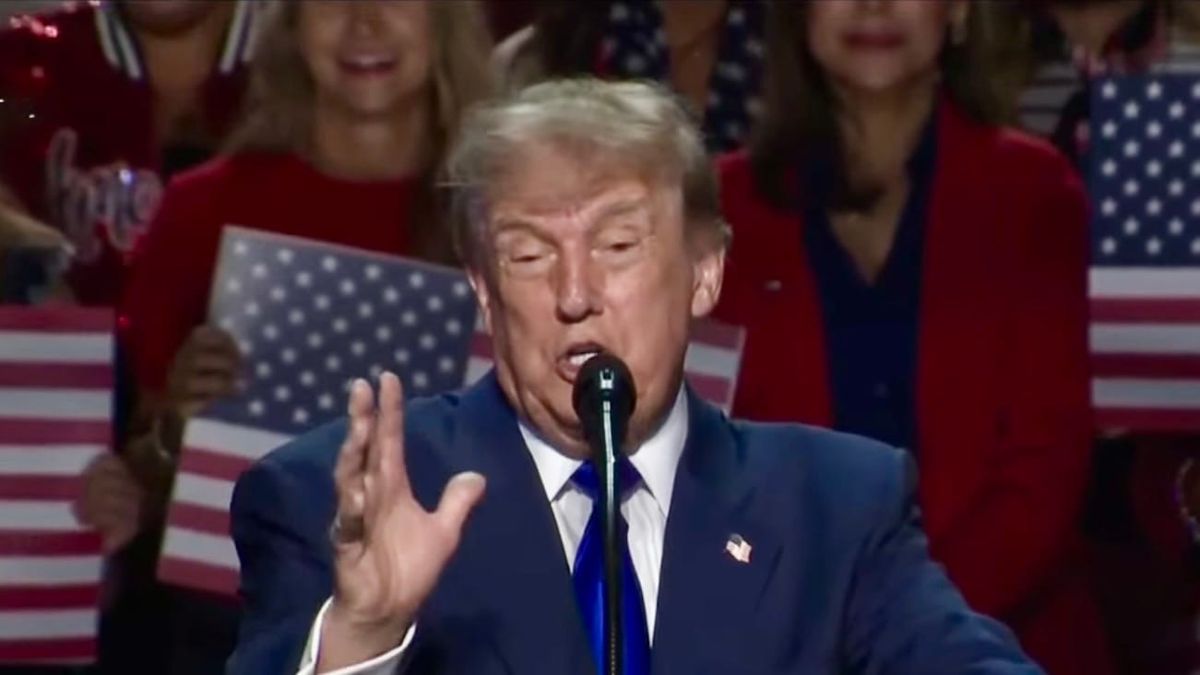
TL;DR: Republicans opened their unprecedented midterm convention — dubbed “Trump-a-palooza” — in Dallas Wednesday night with President Donald Trump firmly at center stage. Trump urged voters to act as though he were on the November ballot and promised a $5,000 “Trump dividend” to every adult U.S. citizen if Republicans retain both the House and Senate.
Trump also defended the war with Iran, saying he believed Tehran had been close to developing a nuclear weapon. That defense comes as only 25% of Americans believe the war is worth fighting and higher oil and gasoline prices add to voters’ cost-of-living concerns.
Republicans also face growing backlash over AI data centers, an issue the party’s own Senate campaign arm has warned could threaten GOP candidates. National polls currently show Democrats ahead on the generic congressional ballot, while affordability remains the dominant issue for voters.
The Dallas convention is the Republican Party’s first midterm national convention and represents a clear gamble: put Trump back at the center of the campaign and hope his ability to turn out occasional voters can help the GOP hold its narrow majorities in Congress.
President Donald Trump turned the opening night of the Republican Party’s unusual midterm convention into a nearly two-hour campaign pitch Wednesday, offering voters a $5,000 cash “dividend,” defending the increasingly unpopular war with Iran and urging Republicans to treat November as if his own name were on the ballot.
The two-day gathering at Dallas’ American Airlines Center has been nicknamed “Trump-a-palooza,” and the description fits. Photographs of the President were plastered throughout the arena, Trump was booked for both nights, and the first evening ended with a lengthy address focused as much on his presidency as the Republican candidates who will actually appear on ballots Nov. 3.
“If we hand America's future to the radical-left Democrats, our nation will spend the next decade just getting back on its feet,” Trump told the crowd. “Vote Republican and we will leave the world in our dust for generations to come.”
Trump told supporters to act as though he were personally running again, saying roughly 35 House and Senate races could decide control of Washington. He pledged to campaign aggressively in those States during the final weeks.
But the biggest surprise of the night was aimed directly at voters’ wallets.
“If the Republicans win the Senate and House, because of our tremendous strength and success economically, I will issue a dividend to every adult citizen in the United States of America for $5,000,” Trump said.
“It will be called the Trump dividend,” he added.
Trump said recipients would have to spend the money in the United States, but offered few other details. The Associated Press estimated a payment to every adult citizen could cost at least $1 trillion. Such a program would also require congressional action rather than simply a presidential order.
The promise was clearly tailored to the issue that may matter most in November: affordability.
A Reuters/Ipsos survey conducted Aug. 28-31 found 47% of registered voters called the cost of living the single most important factor in deciding their midterm vote. Just 22% approved of Trump’s handling of the issue while 71% disapproved.
Another Reuters/Ipsos survey found voters favored Democrats over Republicans on handling the cost of living by 36% to 28%, the Democrats’ largest advantage on the issue since Reuters/Ipsos began asking the question in October 2025.
The labor market also looks better in the headline numbers than it does for many workers.
The official unemployment rate stood at 4.1% in July, but the Ludwig Institute for Shared Economic Prosperity calculated a much broader 24.9% “functional unemployment” rate, which includes workers who cannot find full-time jobs or earn less than its living-wage threshold. The measure is not comparable to the federal unemployment rate, but it helps explain why many voters remain sour on the economy despite relatively low official unemployment.
Trump also devoted a notable portion of his speech to defending the U.S. war with Iran — an issue Republicans may have preferred to keep off the convention stage.
The conflict was not listed as a major item on the official convention agenda. Trump went there anyway.
“We were doing great,” Trump said of the economy before the war, recalling telling his advisers, “I hate to do this to you,” because he believed Iran was perhaps “two, maybe three weeks away from having a nuclear weapon.”
Earlier Wednesday, Trump told reporters he believed the war could end shortly after the election.
“I think the war is going to end immediately after the election,” he said before flying to Dallas.
The timing is politically awkward.
A Reuters/Ipsos poll released Sept. 4 found just 25% of Americans believed the war with Iran was worth fighting.
The war has also fed directly into the affordability problem Trump was trying to address with his $5,000 pledge. Brent crude moved back above $100 per barrel Wednesday as fighting disrupted Gulf energy supplies.
Fox News reported Wednesday that regular gasoline was averaging about $4.22 per gallon nationally, compared with $3.19 one year earlier, while diesel had reached $5.94.
Trump argued that the economic pain was the price of preventing Iran from obtaining a nuclear weapon and suggested oil prices could fall after the conflict ends.
Republicans are also wrestling with an issue that barely registered nationally a year ago: massive AI data centers and the power plants, transmission lines and public incentives needed to support them.
An internal National Republican Senatorial Committee memo obtained by Axios warned AI companies that public hostility to data centers had become a serious political risk, particularly in Ohio.
“This has become a sleeper issue for the entire election cycle,” the memo warned. It also cautioned that if Republicans lose a race and data centers take the blame, elected officials nationwide may become far more reluctant to approve new projects.
RealClearPolitics reported last week that data-center opposition has spread across party lines, driven by concerns about electricity rates, water use, noise, tax incentives and the mismatch between massive power demand and relatively modest permanent employment.
The backlash — and its bipartisan nature — has reached Alabama as well.
U.S. Sen. Tommy Tuberville recently shifted from an open-door stance toward data-center development to arguing that Alabama has spent too much recruiting the industry and promising tighter limits on future incentives.
That makes data centers part of the broader affordability debate. Voters may like artificial intelligence and economic growth in the abstract. They are often less enthusiastic when the project next door consumes enormous amounts of power, receives large tax breaks and appears on the same utility system supplying their homes.
The Dallas gathering itself is highly unusual, in and of itself.
National party conventions normally occur every four years to nominate presidential and vice-presidential candidates and conduct formal party business — but there is no nomination for these positions to be done in 2026.
While Democrats experimented with midterm party conferences during the 1970s and 1980s, national midterm conventions have largely vanished from American politics.
For Republicans, this is a first. Trump announced the event in June as the Republican Party’s first “Midterm Convention,” designed to showcase what he called the “great American comeback.”
RNC Chairman Joe Gruters has been explicit about the strategy.
“We are putting the President on the ballot,” Gruters told Fox News ahead of the gathering. “That's exactly what we're doing with this midterm convention.”
The party hopes Trump can turn out voters who backed him in presidential years but are less reliable during midterms.
That‘s the gamble. Whether or not it will pay off is anyone’s guess.
Republicans currently control Washington, but neither congressional majority gives them much room for error.
The GOP holds a 219-214 House edge and a 53-47 Senate majority. But, recent national polling has tilted significantly toward Democrats.
A Quantus Insights survey of 1,200 likely voters found Democrats leading Republicans 49.7% to 42.8% on the generic congressional ballot, a 6.9-point advantage. Other national surveys have also shown Democrats ahead, although congressional control will ultimately be decided district by district and State by State rather than by the national popular vote.
A separate Focaldata-Financial Times poll released this week also gave Democrats a seven-point lead among likely voters.
The Senate remains a different battlefield, with Republicans defending a larger majority but facing competitive races in several States. Now, a contest once seen as relatively comfortable for the GOP has become far more competitive as economic concerns and Trump’s approval ratings have weighed on Republican candidates.
That being said, who ultimately controls Congress is far from settled. The general election is weeks away, and both the domestic and international situations are far from stable. Generic ballots are not district-level forecasts. Republicans retain major financial, structural and incumbency advantages in a number of races, while Democrats are fighting to preserve long “election seasons” and liberal mail-in ballot rules.
But, the political headwinds explain why Republicans gathered in Dallas for something the party has never tried before.
Trump’s answer Wednesday night was not to retreat from center stage — it was Trump, Trump and more Trump.
His message was simple: Make the midterms a referendum on his presidency, defend even his most disputed policies, offer voters a $5,000 “dividend” if Republicans win — and dare the country to hand Congress to the Democrats.
Because if the Democrats do take control in November? They already have plans for one Donald J. Trump.
The President’s full convention address can be viewed on YouTube and below: