Developer Confirms $3.2B Brookwood AI Data Center Has Green Light
Applied Digital promises tax revenue and 100 jobs, but the massive Brookwood project arrives amid growing data center backlash
TL;DR: Applied Digital has confirmed a $3.2 billion AI data center in Brookwood, promising more than 1,000 peak construction jobs, roughly 100 permanent jobs, $270 million in community benefit payments and about $131.5 million in education taxes over 20 years. The project is also expected to receive roughly $314.5 million in tax abatements. The announcement ends months of uncertainty around a project that has drawn local concern over transparency, power demand, water, environmental effects and the relatively small number of lasting jobs associated with hyperscale data centers.
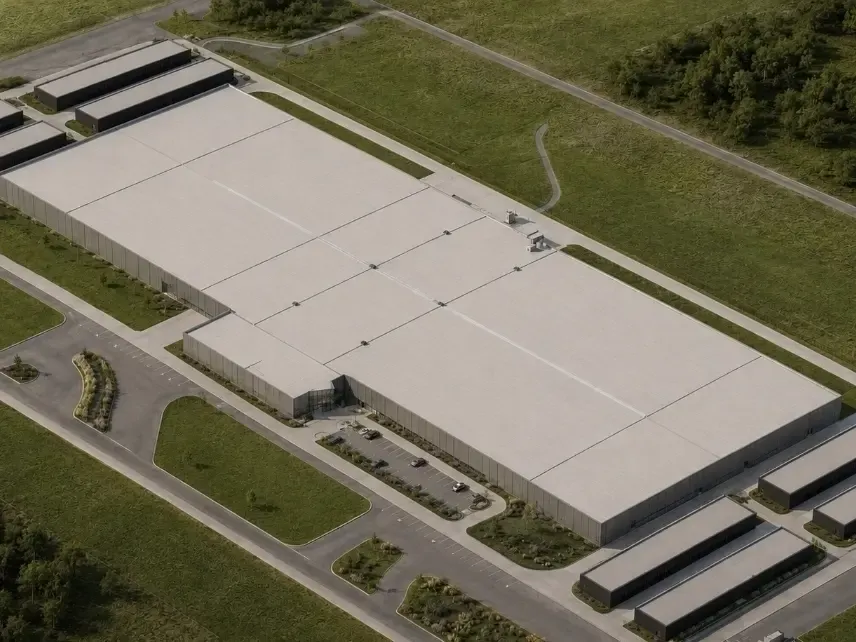
Applied Digital has confirmed that Brookwood in Tuscaloosa County will be home to its $3.2 billion Delta Forge 2 artificial intelligence data center campus, ending months of speculation about one of Alabama’s largest and most controversial new industrial projects.
The Dallas-based company announced Thursday that the massive “AI Factory” will cover about 1.26 million square feet on roughly 160 acres of a nearly 1,300-acre site. Operations are expected to begin in 2028.
The project represents more than $3.2 billion in investment by Applied Digital and its tenant, described by the company as a U.S.-based, high investment-grade “hyperscaler.” Construction is expected to employ more than 1,000 workers at its peak. Once the construction crews leave, however, the sprawling campus is expected to support just over 100 full-time employees.
Applied Digital previously announced that the unnamed tenant signed a 15-year lease for 210 megawatts of critical IT capacity at Delta Forge 2. The agreement represents about $5.2 billion in contracted revenue during its initial term and could reach roughly $12.7 billion if all renewal options are exercised over a 30-year period.
The lease brings Applied Digital’s contracted portfolio to roughly 1.4 gigawatts of critical IT load spread across five AI Factory campuses, representing about $36.2 billion in contracted revenue during the initial 15-year lease terms.
The company says the Brookwood project will become the largest single taxpayer in the city’s history.
Applied Digital has also pledged $270 million in community benefit payments to the Tuscaloosa County Economic Development Authority over 20 years. As Patch has reported, the developer will make 20 annual payments of $13.5 million after the facility enters service.
The money will be shared among Brookwood, Tuscaloosa, Northport, Tuscaloosa County, the Tuscaloosa County Road Improvement Commission and DCH Healthcare Authority. Each entity will receive a share based on the existing local tax distribution.
The project is also expected to generate about $131.5 million in education taxes over 20 years, including roughly $101.6 million in property taxes and $29.9 million in sales and use taxes. Education taxes are not included in the project’s abatement agreement, according to details released by the Tuscaloosa County Economic Development Authority.
On the other side of the ledger, the cost to taxpayers is substantial.
According to a Tuscaloosa County Industrial Development Authority fact sheet obtained by the Tuscaloosa Thread, the project is expected to receive about $314.5 million in tax abatements. That includes roughly $140.7 million in ad valorem taxes over 20 years and $173.8 million in construction-period sales and use taxes.
At $3.2 billion in investment and roughly 100 permanent jobs, the Brookwood project represents more than $30 million in capital investment for each expected permanent position.
An earlier ALPolitics.com review of data center job claims found a similar pattern across the industry. About 80 percent of data center employment is tied to construction, while even some of the largest facilities employ fewer than 150 people after construction is complete.
That report cited a Georgia Tech analysis that found rural areas generally see far less economic spillover from data centers than large metro areas. Researchers cautioned that the broad job and wage growth often promised during recruitment efforts may not materialize on its own.
Industry supporters counter that permanent employment numbers do not capture construction work, indirect jobs, suppliers, new tax revenue and the broader economic impact of large infrastructure projects.
Applied Digital Chairman and CEO Wes Cummins said the project is part of a much larger push to build AI infrastructure across the country.
“Delta Forge 2 reflects the model we are building across Applied Digital – repeatable AI infrastructure delivered at scale and built for the long term,” Cummins said in the company’s announcement. “But our success also depends on the success of the communities where we operate. We partner with communities where our investment genuinely matters, and where the resulting jobs, tax base, and long-term economic activity can have a measurable impact. We have a proven track record of delivering on our commitments to our host communities, and we look forward to bringing that same commitment to Brookwood.”
Brookwood Mayor Joe Barger also welcomed the project.
“For our community, this project is about creating opportunities for local families, strengthening our schools and positioning Brookwood for the future,” Barger said. “We anticipate that Applied Digital will be a good neighbor and a long-term community partner, and expect this $3.2 billion investment to benefit Brookwood residents for generations to come.”
But the project this far has been quite controversial.
ALPolitics.com reported in August that the Alabama Department of Environmental Management had approved a construction stormwater permit connected to Applied Digital’s Brookwood site. The permit allowed stormwater runoff from the development to enter Hurricane Creek and unnamed tributaries.
At the time, Applied Digital would not even confirm that it planned to build the project.
“Applied Digital continually evaluates potential sites in many locations. No decision has yet been made whether or not to proceed with a project at that particular location,” company executive Nick Phillips told WBRC at the time.
The lack of information fueled criticism from residents and environmental advocates who questioned the project’s scale, power needs, potential water demands and effect on the surrounding area. Hurricane Creekkeeper John Wathen also raised concerns about the watershed and the lack of public disclosure.
“They know what’s going on. They knew what was going on and that to me that’s dishonest. It’s disingenuous when you try to represent a community and hide things from them. I think transparency is critical to projects like this because after all it has the potential to be a massive undertaking,” Wathen said.
Applied Digital now says Delta Forge 2 will use closed-loop cooling technology designed to sharply limit water use. The company also says it will pay the full cost required to serve its energy needs so those costs are not shifted to other Alabama Power customers.
Those assurances address some of the issues that have made data centers increasingly contentious across Alabama.
These concerns go well beyond Brookwood. A proposed data center just across the State line in Fayetteville, Tennessee, sparked health and environmental concerns in North Alabama over diesel generator emissions, noise, water demand and the project’s potential effect on nearby communities.
Birmingham went so far as to impose a temporary moratorium while city officials developed new data center rules. In June, the City Council adopted 20 conditions for future hyperscale data centers.
Those rules include a 500-foot setback from residential and urban neighborhood districts, closed-loop cooling, water conservation requirements, sound studies and noise barriers, limits on diesel generators and disclosure of expected power demand. Property owners within 500 feet must also be notified by certified mail.
Questions are also growing over the broader economics of the AI boom. An ALPolitics.com analysis of the growing risks surrounding AI investment examined concerns about soaring capital costs, enormous power demands and whether the economic returns from the rush to build AI infrastructure will live up to expectations.
The Brookwood fight has also highlighted concerns over government transparency.
WBRC reported that the proposed development had been linked to Applied Digital since July, when an ADEM permit application pointed to the company’s plans for a large data center in Brookwood. Applied Digital said at the time that no final decision had been made. Brookwood Mayor Joe Barger did not publicly confirm that the proposed development was an AI data center until a Sept. 2 City Council meeting.
Now the project has a name, a price tag and an approved incentive package.
For Brookwood, the deal brings an extraordinary amount of capital into a small Alabama community, along with hundreds of millions of dollars in projected taxes and community payments.
It also puts the town near the center of Alabama’s growing debate over AI infrastructure: how communities should weigh billions of dollars in private investment and new tax revenue against tax abatements, enormous power needs, environmental concerns and the relatively small number of permanent jobs left after construction is finished.